Tree Cabling 101: How Arborists Save Split Trunks
Cabling can buy a vulnerable tree decades of extra life. Here's how the system works — and when it's the right call.
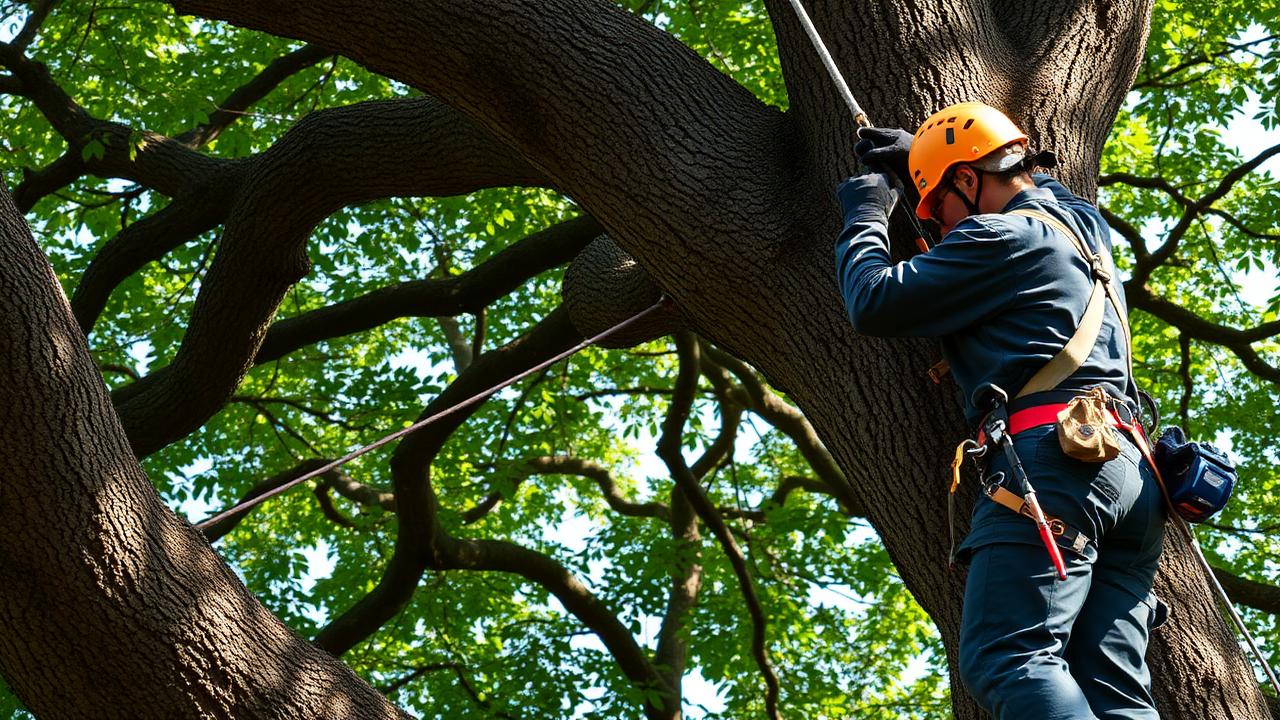
If your tree has a split trunk, a major crack at a fork, or two co-dominant stems that look like they could pull apart in the next big storm, you don't necessarily have to remove it. Cabling — a high-strength steel support system installed up in the canopy — distributes load between weak parts of the tree and prevents catastrophic failure.
It's one of the most underused tools in arboriculture, and it can save trees other companies have already written off.
How a cabling system actually works
We climb the tree and install high-strength galvanized or stainless steel cables (and sometimes through-bolt rods for the worst splits) about two-thirds of the way up the trunk, between the limbs that need support. The hardware is rated to handle wind loads on a mature tree, and it's installed using techniques that minimize damage to the cambium.
When wind hits the tree, the cables share the load between the supported limbs instead of all the stress concentrating at the weak union below. A properly cabled tree can withstand storms that would otherwise split it in half.
When cabling makes sense
- Mature, valuable trees with included bark at the main fork (a sign the union was weak from the start)
- Trees with a recent split that hasn't fully failed yet
- Trees with one heavy lateral limb extending over a target — house, driveway, play area
- Specimen trees where removal would meaningfully reduce property value or shade
When it doesn't
- The tree is already failing structurally throughout, not just at one point
- The wood is significantly decayed at the proposed cabling attachment points
- The combined cost of cabling plus monitoring approaches removal-and-replanting (rare for mature specimens, but it happens)
Maintenance is part of the deal
Cabling isn't install-and-forget. Cables should be inspected every 3–5 years and replaced when worn, corroded, or when the tree has grown enough to change the geometry. We track this for every cabling job we install and reach out when it's time to inspect.
Frequently asked
Will cables damage my tree?+
Properly installed cables cause minimal damage — a small entry point per anchor that the tree seals around within a year or two. Improperly installed cables (girdling wraps, undersized hardware) can cause real harm.
How long does a cabling system last?+
Hardware itself can last 20+ years. We recommend visual inspections every 3–5 years and replacement when wear, corrosion, or growth changes warrant it.
Free on-site estimate
Got a tree like this on your property?
28 years climbing trees in Northern NJ. We'll tell you straight up whether the work is needed — no pressure, no upsell. Same-week appointments across Morris, Essex, Passaic, and Bergen.